Geotechnical Material Manufacturers


158 mm Slotted HDPE Corrugated Drainage Pipe for Subsurface Drainage
Subclassification:
Drainage materials series
Key words:
Drainage materials series
Email:
WhatsApp:
Product Details
HDPE Corrugated Drainage Pipe - Flat Profile
This is a flat-section HDPE drainage pipe: 158 mm wide, 40 mm high, with a grooved and slotted upper face. Because the capture face is wide and shallow rather than round, the pipe intercepts percolating water over a broad footprint while sitting in a trench a fraction of the depth a round pipe of similar capacity would need. It is moulded from high-density polyethylene, so it does not corrode, absorbs almost no water and can be lifted and laid by two people.
Flat 158 x 40 mm section for shallow, narrow trenches and trenchless layoutsGrooved top face slotted at 3.0 x 25 mm to take water in along the full run
- HDPE body: 0.1-0.3% water absorption, 30-40 MPa tensile strength
- Corrugated ribs let the bare pipe carry around 2,000 kg without collapsing
- Snap-on cross connectors and adaptors join runs and discharge into round pipe
- OEM/ODM: profile size, slotting pattern, coil length, colour and packing


How the Flat Corrugated Profile Works
- the 158 mm slotted face sits directly under the root zone or bedding layer, so water percolating down is caught across the whole width instead of at a single round opening. In the same trench depth this gives up to twice the ingress capacity of conventional round pipe.
- transverse corrugations and longitudinal grooves behave as a row of small arches, spreading backfill and traffic loads into the surrounding soil. The bore stays open under compaction plant, which is the failure mode that takes round drainage pipe out of service.
- the internal channel is straight and continuous with no sudden changes of section, so water leaves at high velocity and the drain clears in roughly half the time a traditional system needs - the reason surfaces become usable again soon after heavy rain.
- the open slot pattern also vents the root zone. In hot, humid weather air moves through the pipe and draws moisture out of the profile, which keeps turf roots healthier above the drain line and is a large part of why sports-field specifiers choose this profile.
Product Parameter Table
Parameter | Unit | Reference Specification |
Product name | / | HDPE corrugated drainage pipe, flat profile |
Material | / | High-density polyethylene (HDPE), virgin resin |
Profile | / | Flat section with transverse corrugations and grooved top face |
Width | mm | 158 (standard) |
Height | mm | 40 |
Length | m | 100 per coil (other coil lengths on request) |
Slot size | mm | 3.0 x 25 |
Slotting | / | Single-sided or double-sided |
Water absorption | % | 0.1 - 0.3 |
Tensile strength | MPa | 30 - 40 |
Dimensional standard | / | ASTM D2122 |
Load capacity | kg | Bare pipe supports approx. 2,000 without collapse |
Fittings | / | Cross connector, adaptor coupling, round-pipe outlet |
Filter option | / | Geotextile wrap for fine-grained soils |
Colour | / | Black (other colours on request) |
Packing | / | Coiled, wrapped; approx. 15 kg per coil |
HS code | / | 3917210000 |
OEM/ODM | / | Available - profile, slotting, length, colour, packing, private label |
System Components
The pipe is supplied as a system, not as loose coil, so a run can be laid and connected in one pass:
Component | Function |
Flat drainage pipe | Main collector, 158 x 40 mm, slotted, 100 m coil |
Cross connector (4-way) | Joins four pipe ends in a grid layout, e.g. herringbone field drainage |
Adaptor coupling | Straight joint between two pipe ends and step-down between profiles |
Round-pipe outlet | Discharges the flat run into a round collector or inspection chamber |
Geotextile wrap | Optional filter sleeve for silt, fine sand and leachate applications |
Typical Uses
- root-zone drainage below the growing medium on football pitches, golf greens and fairways, and racecourses, laid in a herringbone or grid pattern and connected with 4-way cross pieces.
- perimeter and slab-edge collection around basements and foundations, where the shallow section keeps the excavation inside the design depth of the structure.
- subsurface drainage beside runways, taxiways and hardstands, where the flat profile fits within the pavement structure without raising finished levels.
- leachate collection and groundwater control around landfill cells, treatment areas and containment bunds, with the geotextile wrap specified for aggressive ground water.
- interceptor drains behind retaining walls, below embankments and along road verges, relieving hydrostatic pressure before it reaches the structure.
- green roofs, podium decks and planter areas, where buildup depth is limited and a round pipe simply will not fit.
Quality Control
Coils are checked from resin to finished pipe: incoming HDPE is verified for grade and melt flow, the extrusion line is monitored for wall thickness, profile height and slot spacing, and sampled lengths are flattened under load and checked for recovery. Slot size, coil length and dimensional tolerance are measured against ASTM D2122, each coil is labelled with a traceable batch number, and inspection records with third-party certificates (SGS / BV) can be issued for project submittals.
Packing and Delivery
Pipe is wound into 100 m coils, wrapped and strapped with the coil end protected, then palletised or loaded loose; coils stack flat, so a 40HQ takes a large metreage for its weight. Loading plans with coil counts, metreage and weights accompany every quotation. Orders ship within 7-14 days of deposit, FOB Qingdao as standard with CFR and CIF on request, and third-party pre-shipment inspection can be arranged before loading.
FAQ
Q1: What is the advantage of a flat pipe over round drainage pipe?
A: Depth and capture width. The 158 mm slotted face catches water over a wide footprint while sitting only 40 mm high, so trenches are shallower and narrower, less backfill material is needed and the drain can be laid directly on a prepared base under a sports surface.
Q2: Do the slots clog with soil?
A: In clean gravel or sand bedding the pipe is laid unwrapped. In silt, fine sand or leachate applications a geotextile wrap is fitted over the slotted face; it passes water and holds particles out, which keeps the slots open for the life of the drain.
Q3: Can it survive construction traffic?
A: The corrugated rib structure lets a bare length carry around 2,000 kg without collapsing, which covers compaction plant and delivery vehicles crossing a laid field before the surface is installed. Point loads directly on an unsupported coil should still be avoided.
Q4: How are lengths joined, and can runs change direction?
A: Ends butt together through a snap-on adaptor coupling. A 4-way cross connector builds grid and herringbone layouts, and a round-pipe outlet adaptor discharges the run into a collector main or chamber. No solvent or welding is needed.
Q5: What coil length and weight should we plan for?
A: The standard coil is 100 m at roughly 15 kg, which one person can carry and two can lay. Coil lengths can be cut to your layout under OEM, and the number of connectors is quoted against your drainage drawing.
Q6: Is it affected by UV or by chemicals in the ground?
A: HDPE is chemically inert in normal ground water, resists acids, alkalis and salts, and absorbs only 0.1-0.3% water. Coils stored outdoors for long periods are supplied with UV-stabilised compound or a protective wrap on request.
Q7: What do you need to quote?
A: Send the application (sports field, foundation, runway, landfill), total metreage, layout or drainage drawing, soil type, whether a geotextile wrap is required, quantity and destination port. A loading plan and connector list come with the offer.
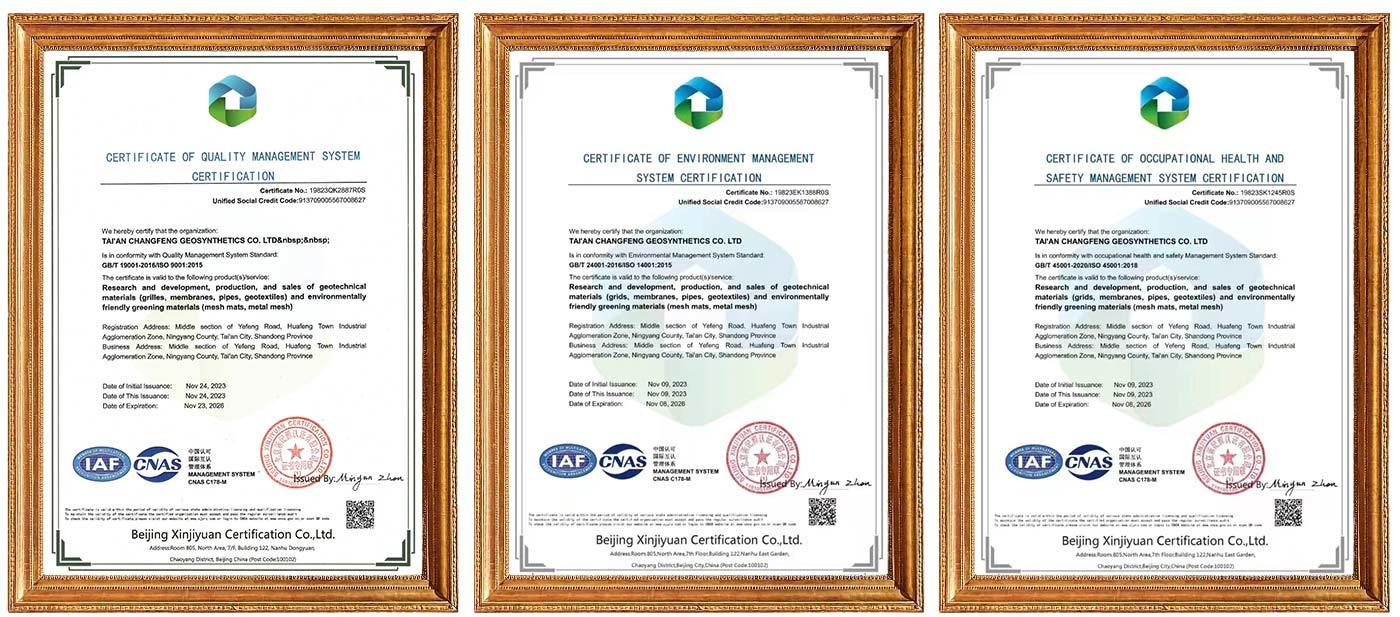
Honor
MESSAGE
CONTACT US
Tel : +8617863869299
WhatsApp : +86-17863869299
Wechat : 17863869299
Email:wdf001@wdfgeomat.com
Address:Huafeng New Materials Industrial Park, Huafeng Town, Ningyang County, Shandong Province


GET A FREE QUOTE
Copyright : Taian Wandefu Polymer Composite Materials Co., Ltd. Seo Tags